The Definitive Guide to Sourcing Independent Family Accommodations
Family vacations are shifting away from predictable, cookie-cutter lodging toward more personalized, culturally immersive experiences. While boutique hotels are traditionally associated with solo travelers or couples, a growing segment of independent properties now caters specifically to multi-generational groups. Finding these hidden gems requires moving beyond standard booking engines and adopting a more strategic approach to research.
This comprehensive guide outlines exactly how to find unique boutique hotels for family vacations. Readers will learn how to identify properties that balance intimate, design-forward environments with practical family amenities, evaluate different research methodologies, manage travel budgets, and mitigate the common risks associated with booking independent accommodations.
Overview of Sourcing Independent Family Accommodations
Understanding how to find unique boutique hotels for family vacations requires a shift in how travelers define luxury and convenience. Unlike major global hotel chains, which rely on standardized layouts, predictable loyalty programs, and uniform amenities, boutique hotels are typically defined as smaller, independently operated properties (often featuring fewer than 100 rooms) that possess a distinct architectural style, localized character, and personalized service.
Historically, families avoided boutique properties due to a perceived lack of child-friendly infrastructure. However, modern independent hotels frequently incorporate spacious multi-bedroom suites, curated local activities, and dedicated family programming that avoids the crowded, commercial feel of mass-market resorts.
When executing a search, the primary goal is to find an intersection between character and functionality. Travelers look for properties that offer authentic cultural immersion for adults while simultaneously providing the safety, space, and geographic convenience required when traveling with children or teenagers. The typical outcome of a successful search is a highly memorable, tailored stay that serves as a central highlight of the vacation itself, rather than merely a place to sleep.
Primary Methodology Categories
Sourcing independent, family-friendly properties can be approached through several distinct research lenses. Depending on available time and specific vacation goals, travelers generally utilize one or more of the following methodology categories.
Comparison of Sourcing Methodologies
| Category / Type | Description | Common Use Case | Time / Cost / Effort Level |
| Curated Design Collections | Utilizing vetted, independent hospitality networks that filter properties by architectural and design standards. | Finding design-forward properties that also welcome children. | Moderate Time / High Cost / Low Effort |
| Geographic Aggregation | Searching Hyper-local tourism boards and regional micro-sites dedicated to specific municipalities or provinces. | Uncovering hidden countryside estates or historic villas not listed on major global platforms. | High Time / Low Cost / High Effort |
| Social & Editorial Sourcing | Leveraging travel journalism, specialized family travel publications, and industry award lists. | Identifying newly opened or highly trending boutique properties. | Moderate Time / Medium Cost / Moderate Effort |
| Boutique Travel Specialists | Engaging boutique-focused travel advisors or agencies who hold direct relationships with independent hoteliers. | Complex, multi-generation trips requiring highly customized room configurations or buyout options. | Low Time / High Cost / Low Effort |
Selecting the Right Approach
Choosing among these methods depends largely on the destination and the traveler’s available planning time. For well-established European or domestic coastal destinations, curated design collections and editorial sourcing yield rapid results. Conversely, for rural, off-the-beaten-path locations, geographic aggregation via local tourism boards remains the most reliable way to find compliant, safe, and authentic family boutique lodging.
Practical Scenarios and Thematic Applications
To illustrate how to find unique boutique hotels for family vacations, consider three common travel scenarios that appeal to different family demographics and geographic interests.
Scenario 1: The Historic European City Stay
Families traveling to historic urban centers often seek central properties that reflect the city’s heritage without sacrificing modern comforts like climate control and elevators.
-
Step-by-Step Search Process:
-
Identify historic preservation districts within walking distance of primary cultural sites.
-
Query localized boutique networks (e.g., historic châteaux or converted palazzo associations).
-
Verify room configurations, specifically looking for “family apartments” or connecting rooms within historic layouts.
-
Cross-reference independent reviews regarding street noise and accessibility with strollers.
-
-
Key Elements & Examples: Restored 17th-century townhouses in Amsterdam; converted merchant estates in Florence; boutique riads in Marrakech.
Relevance of the Urban Scenario
Urban boutique stays are highly relevant because traditional hotels in city centers often have strict occupancy limits due to historic building codes. Finding unique boutique spaces allows families to stay together in centrally located, architecturally significant neighborhoods rather than commuting from large suburban chain hotels.
Scenario 2: The Regenerative Rural Eco-Lodge
For families focused on nature, sustainability, and outdoor education, eco-boutique properties offer immersive environments that double as educational experiences for children.
-
Step-by-Step Search Process:
-
Target regions known for conservation efforts, national parks, or agricultural tourism.
-
Search global sustainable tourism databases and green-certified hospitality registries.
-
Review the property’s daily activity schedule to ensure age-appropriate outdoor workshops, wildlife viewing, or farm-to-table experiences exist.
-
Confirm safety infrastructures, such as secure perimeters, on-site medical kits, and reliable transport links.
-
-
Key Elements & Examples: Treehouse lodges in the Costa Rican rainforest; farm-stays (agriturismi) in Tuscany; architectural eco-cabins in the Pacific Northwest.
Relevance of the Nature Scenario
This scenario addresses the growing demand for experiential travel. It removes children from screen-heavy environments and places them in interactive, natural settings, offering a balanced vacation structure where entertainment is built directly into the landscape of the hotel.
Scenario 3: The Coastal Boutique Resort
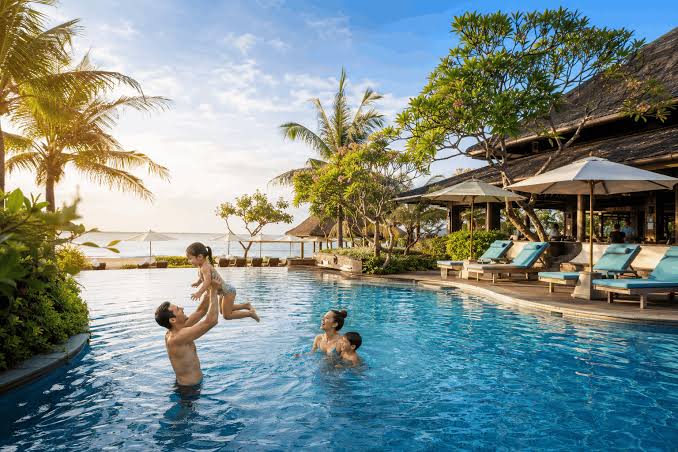
Beach vacations often default to massive, all-inclusive resorts. However, families seeking a quieter, more intimate coastal experience can target boutique beach properties.
-
Step-by-Step Search Process:
-
Screen coastlines for small-scale, independently owned beachfront properties containing fewer than 50 keys.
-
Filter for specific waterfront amenities, such as private beach access, complimentary non-motorized water sports, and shallow pool areas.
-
Check for flexible dining options, such as en-suite kitchenettes or custom children’s menus prepared by on-site chefs.
-
Assess proximity to local seaside villages to ensure the family is not isolated to the property.
-
-
Key Elements & Examples: Cliffside boutique properties in Greece; independent surf-lodges in Bali; historic seaside inns in New England.
Relevance of the Coastal Scenario
Coastal boutique properties provide an alternative to high-density resort complexes. They allow families to enjoy beach environments with higher levels of privacy, fewer crowds around communal spaces, and a more relaxed, authentic connection to the local coastal community.
Scenario Comparison
While the Urban scenario prioritizes geographic proximity and architectural navigation, the Nature scenario focuses on on-site programming and environmental education. The Coastal scenario balances relaxation with private outdoor recreation. Families with toddlers often find Coastal properties the easiest to navigate, while those with teenagers typically benefit more from the autonomy and cultural density of Urban boutique hotels.
Planning, Budgeting, and Resource Considerations
Securing independent lodging requires early planning and a flexible approach to budgeting. Unlike major chains, boutique hotels do not have thousands of identical rooms, meaning family-sized suites and connecting rooms book up months in advance. Furthermore, seasonal price fluctuations can be more dramatic in independent properties, making comprehensive budgeting essential.
Sample Family Boutique Hotel Budget & Planning Framework
Note: The figures, allocations, and timelines provided below are illustrative examples for a standard one-week family trip and will vary based on destination, seasonality, and party size.
| Category | Estimated Amount / Effort | Explanation | Optimization Tips |
| Base Room Rate | $350 – $700 / night | For a family suite or guaranteed connecting rooms reflecting local design. | Book 6–9 months in advance for peak seasons to lock in lower early-bird tier pricing. |
| Local Taxes & Resort Fees | 10% – 20% of base rate | Municipal tourist taxes, environmental levies, or historic preservation fees. | Check local government websites; some regions waive children’s tourist taxes entirely. |
| Activity & Amenity Add-ons | $50 – $150 / day | Curated family workshops, private guides, or equipment rentals (bikes, kayaks). | Inquire about bundled family packages directly with the front desk via email before arrival. |
| Dining & Provisions | $100 – $250 / day | On-site independent restaurants, breakfasts, or stocking an en-suite kitchenette. | Opt for room rates that include hot breakfast, as boutique properties often feature high-quality local fare. |
| Security Deposit | $200 – $500 (Refundable) | Hold placed on credit card at check-in for incidentals or property damage. | Use a dedicated credit card with a high limit so active funds are not frozen during travel. |
Research Strategies and Discovery Tools
Uncovering properties that meet the criteria of being both unique and family-appropriate requires utilizing non-traditional travel tools and investigative strategies.
1. Specialized Design Directories
-
What it is: Curated platforms that aggregate independently owned hotels selected for architectural significance, distinct interior design, and cultural integration.
-
Advantages: High aesthetic standards; eliminates low-quality or poorly managed properties; clear overviews of property philosophy.
-
Disadvantages: Can be restrictive in budget options; not all properties listed accept young children; limited geographic coverage in rural areas.
2. Hyper-Local Municipal Tourism Boards
-
What it is: Official promotional web registries managed by regional governments, town councils, or provincial hospitality associations.
-
Advantages: Lists small, hyper-local properties that refuse to pay high commission fees to major online travel agencies; ensures proper licensing and safety compliance.
-
Disadvantages: Websites can feature outdated interfaces; may require translation; direct email communication is often required to book.
3. High-End Editorial Lists and Travel Awards
-
What it is: Annual lists, rankings, and deep-dive reviews compiled by reputable global travel editors, architecture magazines, and independent hospitality critics.
-
Advantages: Pinpoints newly opened properties; provides authentic insight into service quality, food standards, and neighborhood vibes.
-
Disadvantages: Can lead to rapid booking inflation once a property trends; reviews may focus more on adult aesthetics than family practicality.
4. Independent Travel Advisors
-
What it is: Professional human consultants who specialize in bespoke travel routing and maintain direct personal lines to boutique hotel owners.
-
Advantages: Access to unlisted inventory; leverage to secure VIP perks (e.g., free breakfast, room upgrades); direct advocacy if issues arise.
-
Disadvantages: May require an upfront planning fee or retainer; less control over the direct hands-on discovery process for DIY planners.
Risks, Challenges, and Mitigation Strategies

Booking independent lodging introduces unique variables that do not exist within standardized corporate hotel chains. Understanding these risks prevents logistical friction during the vacation.
Occupancy Law and Bedding Mismatches
-
The Risk: Many boutique properties are housed in historic buildings with strict fire codes limiting room occupancy to two persons, regardless of age. Families arriving with children may find their reservation invalid or be forced to rent an additional room at short notice.
-
Mitigation: Never assume a standard room can accommodate a rollaway bed or crib. Always input the exact ages of all children into the booking request and obtain written confirmation from the hotel management stating that the room configuration legally accommodates the total party size.
Inconsistent Amenity Standards
-
The Risk: Boutique hotels pride themselves on being unique, which can mean an absence of standard amenities like elevators, central air conditioning, soundproofing, or 24/7 front desk support.
-
Mitigation: Create a non-negotiable checklist of essential family amenities before beginning your search. Contact the property directly to ask explicit questions: “Is there an elevator to the third floor?” or “Does the pool have a dedicated lifeguard or safety fence?”
Stringent Cancellation Policies
-
The Risk: Independent properties operate on thin margins with limited inventory. Consequently, their cancellation and modification policies are often far stricter than global chains, sometimes offering zero refunds within 30 days of arrival.
-
Mitigation: Purchase comprehensive travel insurance that includes a “Cancel for Any Reason” (CFAR) rider. Alternatively, book flexible, slightly higher room rates directly through the hotel website rather than non-refundable third-party booking channels.
Hidden Accessibility and Safety Issues
-
The Risk: Historic structures converted into boutique accommodations may feature open floating staircases, low windows, balconies with wide railings, or steep cobblestone approach paths that present safety hazards for toddlers or mobility challenges for elderly family members.
-
Mitigation: Utilize satellite map views to check the immediate topography surrounding the hotel. Request ground-floor rooms or rooms away from steep drops, and review user-submitted photos on travel forums to inspect balcony and staircase designs.
Best Practices for Post-Booking and Long-Term Management
The process of securing an independent hotel does not end at the checkout screen. Implementing a routine post-booking workflow ensures that expectations align with reality upon arrival.
A Checklist for Verifying Independent Bookings
-
3 Months Before Departure: Re-verify the reservation directly via an email to the property’s general manager. Reconfirm any specific room location requests (e.g., ground floor, quiet wing).
-
1 Month Before Departure: Arrange any needed on-site logistics, such as reserving specialized high chairs, baby gates, cribs, or booking spots in limited-capacity hotel workshops or excursions.
-
2 Weeks Before Departure: Provide the hotel with an estimated arrival time, detail any severe family dietary restrictions or allergies to the kitchen staff, and request clear driving, parking, or public transit instructions.
The Value of Active Communication
Maintaining an active line of communication with independent hoteliers is highly beneficial. Unlike corporate chains governed by strict scripts, boutique hotel operators possess deep local knowledge and have the autonomy to customize stays. Engaging them early allows them to tailor your family’s itinerary, recommend age-appropriate local dining, and prepare staff to welcome your group personally.
Documentation and Itinerary Integration
To maintain organization across multiple independent bookings, travelers should consolidate all specific property data into a standardized travel document. Independent hotels often have unique entry codes, varying check-in parameters, and distinct contact methods that differ from standard resorts.
Tips for Managing Boutique Hotel Information
-
Digitize and Centralize: Store PDFs of direct email confirmations, payment receipts, and written amenity promises in an offline-accessible digital folder.
-
Map Logistics Locally: Pin the exact physical entrance of the boutique hotel on an offline digital map application, as independent properties in old towns can be difficult for standard GPS systems to locate.
-
Document Local Emergency Data: Always note the closest 24-hour pharmacy and hospital relative to the hotel property.
Illustrative Examples of Property Integration
Example 1: The Urban Palazzo Integration
-
Property Data Notes: Residenza Palazzo V, Florence. Check-in via private pedestrian gate on Via dei Servi. Code provided 24 hours prior. Third floor, elevator available. Nearest parking garage is 15 minutes away; valet must be pre-arranged.
Example 2: The Rural Agro-Tourism Integration
-
Property Data Notes: Finca de la Luna, Andalusia. Located 4 km down an unpaved gravel road off Route A-382. On-site dinner requires 24-hour advance notice. Children’s morning farm tour departs daily at 8:30 AM from the main barn.
Closing Summary
Learning how to find unique boutique hotels for family vacations changes family travel from a generic trip into a deeply localized cultural experience. By abandoning standard corporate booking habits and instead utilizing curated design directories, exploring local municipal registries, and conducting diligent safety and occupancy checks, travelers can unlock exceptional independent accommodations. While sourcing these properties requires greater research effort, more intentional budgeting, and proactive direct communication, the result is a personalized, safe, and highly memorable vacation environment tailored perfectly to the needs of every family member.
Frequently Asked Questions (FAQ)
What defines a hotel as a “boutique” property?
A boutique hotel is typically characterized as an intimate, independently owned and operated hotel that usually contains fewer than 100 rooms. It features a highly distinct architectural style, localized interior design elements, a strong sense of place, and highly personalized customer service, separating it from large, standardized corporate hospitality chains.
Are boutique hotels safe for families with young toddlers?
Yes, many boutique hotels are safe for young children, but it requires active verification. Because these properties are often located in historic or uniquely designed buildings, travelers must look out for potential hazards such as steep stairs, open balconies, or unfenced pools. Communicating directly with the hotel prior to booking helps ensure your specific room can be childproofed or fitted with safety gates.
Why do some boutique hotels have strict occupancy limits for families?
Boutique hotels often occupy historic buildings governed by strict local municipal fire codes, structural load limits, and preservation laws. These regulations legally limit the number of individuals allowed in a specific room footprint regardless of age. To avoid being turned away, always declare the exact number of adults and children during your initial search.
How far in advance should I book a boutique hotel for a family trip?
As a best practice, family suites, villas, or connecting rooms in independent boutique hotels should be booked 6 to 9 months in advance, particularly if traveling during peak school holiday seasons. Because boutique properties have limited inventory, their largest, family-friendly room categories are typically the first to sell out.
Do boutique hotels offer loyalty rewards programs like major chains?
While individual boutique hotels generally do not offer independent global loyalty points programs, many belong to larger curated marketing alliances or independent networks (such as Small Luxury Hotels of the World or Design Hotels). These networks allow travelers to earn and redeem perks across a wide footprint of independent properties worldwide.