Maximizing Premium Economy Family Travel via American Express Membership Rewards
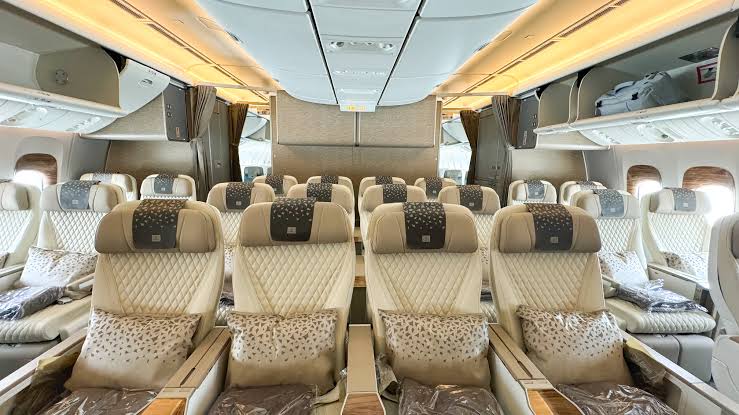
Aviation logistics require balancing structural comfort against financial outlays, especially when organizing travel for an entire household. While economy class presents obvious space limitations during long-haul international flights, business class redemptions can deplete a loyalty portfolio rapidly when booking multiple contiguous seats. Premium economy serves as a practical middle tier, delivering upgraded legroom, dedicated cabin dividers, enhanced culinary menus, and increased luggage allowances without the premium points cost of a business class ticket.
Executing these multi-seat bookings through the American Express Membership Rewards ecosystem requires a clear understanding of dynamic award availability, airline alliances, and partner transfer ratios. Relying solely on standard airline searches or portal redemptions often results in low value per point and minimal seat availability for multi-passenger groups. This educational guide establishes a systematic framework detailing how to use amex points to book premium economy family flights, providing readers with the architectural knowledge necessary to audit award charts, optimize transfer windows, and secure group inventory.
Overview of Premium Economy Rewards Sourcing
Understanding how to use amex points to book premium economy family flights requires a precise grasp of transferable points mechanics. American Express Membership Rewards operate as a flexible currency that can be migrated out of the banking institution and into third-party airline loyalty programs, typically at a 1:1 transfer ratio. Unlike fixed-value travel credits that tie the point directly to the cash price of a ticket (e.g., one point equals exactly one cent), transferable points leverage capacity-controlled award charts to bypass inflated cash rates during peak holiday periods.
When families evaluate premium economy cabins via frequent flyer programs, they must target “Saver” tier inventory. Airlines segment their premium economy cabins—marketed under various names such as Air France Premium, Delta Premium Select, or Singapore Airlines Premium Economy—into specific booking codes reserved for award redemptions. The ultimate goal of a structured acquisition strategy is to locate dates where an operating carrier has released a sufficient cluster of saver-level seats to its own program or alliance partners, enabling the family to secure upgraded comfort while maintaining an efficient points spending velocity across the entire household.
Key Transfer Paradigms and Alliance Frameworks
The execution of a multi-seat premium economy booking relies on three primary global airline alliances: Star Alliance, SkyTeam, and Oneworld. Amex points must be routed through specific high-utility transfer partners representing these groups.
Comparison of Primary Amex Transfer Partners for Premium Economy
| Category / Type | Description | Common Use Case | Time / Cost / Effort Level |
| Air France-KLM Flying Blue | SkyTeam partner utilizing dynamic pricing alongside monthly fixed-discount “Promo Rewards” calendars. | Transatlantic routes connecting North America to Europe with predictable multi-seat availability. | Instant Transfer / Moderate Taxes & Surcharges / Low Strategy Effort |
| Air Canada Aeroplan | Star Alliance giant utilizing a distance-and-zone-based award chart with zero carrier fuel surcharges. | Complex global routings including United Airlines, Lufthansa, and Singapore Airlines metal. | Instant Transfer / Low Cash Fees / High Optimization Effort |
| British Airways Executive Club | Oneworld anchor using a distance-based structure per segment; shares a common currency (Avios) with Qatar Airways and Iberia. | Non-stop flights on American Airlines or British Airways; short- to medium-haul family transits. | Instant Transfer / High Surcharges on Long-Haul / Moderate Effort |
| Singapore Airlines KrisFlyer | Independent Star Alliance carrier that restricts its own premium economy award inventory primarily to its own members. | Direct routes to Asia and select European “Fifth Freedom” routes departing from the US East Coast. | Instant Transfer / Moderate Surcharges / Moderate Effort |
To choose between these configurations, families must weigh the total mileage requirement against the carrier-imposed cash surcharges. For example, while British Airways Avios offers excellent distance-based sweet spots for Oneworld flights, long-haul segments on its own aircraft pass on high fuel surcharges. Conversely, Air Canada Aeroplan charges slightly more points for certain zones but eliminates these surcharges entirely on partner airlines, making it highly cost-effective for larger family groups.
Practical Scenarios and Thematic Applications
The strategic selection of a transfer partner changes based on your destination, group size, and seasonal constraints.
Scenario 1: The Transatlantic Summer School Break Expedition
This application targets moving a four-person family unit from a major US gateway across transatlantic corridors to Western Europe during the highly competitive summer vacation window.
-
Execution Steps:
-
Monitor the Air France-KLM Flying Blue portal exactly 11 months before the departure date or on the 1st of each month when “Promo Rewards” are published.
-
Verify that four premium economy seats are open simultaneously on the exact same flight number.
-
Calculate the standard award requirement (typically 40,000 miles one-way per passenger under the standardized pricing baseline).
-
Confirm that an active Amex Membership Rewards transfer bonus to Flying Blue is available (frequently ranging from 20% to 30%).
-
Initiate the transfer from the Amex dashboard, reducing the net points required from 160,000 to approximately 124,000 points for the entire family group.
-
Complete the booking immediately online, paying the remaining cash taxes and airport fees.
-
-
Key Components: Promo Rewards calendars, transfer bonus maximization, and SkyTeam network integration.
-
Relevance: It bypasses high summer cash surcharges while ensuring the family stays together in an upgraded cabin zone.
Scenario 2: The Multi-Seat Star Alliance Journey to Asia
Designed for a family of three seeking to travel across transpacific corridors using Star Alliance carriers, where long flight hours make premium economy legroom a safety and comfort priority.
-
Execution Steps:
-
Log into the Air Canada Aeroplan portal to search for partner award space operated by Eva Air, ANA, or Singapore Airlines.
-
Filter the search parameters strictly for “Premium Economy” and look for the lowest fixed-tier mileage thresholds based on the Aeroplan distance-and-zone tables.
-
Confirm that three seats are open in the saver award bracket to ensure all family members are booked on the same PNR (Passenger Name Record).
-
Verify that the routing does not introduce excessive domestic layout changes or mixed-cabin downgrades on connecting flights.
-
Transfer Amex points to Aeroplan at a 1:1 ratio.
-
Secure the tickets, paying the standard CA$39 partner booking fee per ticket alongside mandatory government taxes.
-
-
Key Components: Distance-zone matrix auditing, partner carrier space verification, and mixed-cabin avoidance.
-
Relevance: This prevents families from incurring massive cash outlays on ultra-long-haul flights while benefiting from Aeroplan’s policy of absorbing carrier fuel surcharges.
Scenario 3: The Oneworld Multi-Gen Non-Stop Coastal Escape
A scenario focused on moving a family unit along high-traffic routes operated by Oneworld carriers (such as American Airlines or British Airways) using distance-based pricing.
-
Execution Steps:
-
Utilize the British Airways Executive Club search interface to isolate direct, non-stop premium economy segments.
-
Confirm that the required number of seats match the off-peak calendar dates enforced by the Avios network to secure lower mileage rates.
-
If booking an American Airlines-operated flight, ensure that the seat inventory is released to partners by cross-checking availability on a secondary Oneworld portal.
-
Link the parents’ and children’s individual frequent flyer accounts into a single “British Airways Household Account” to allow points pooling.
-
Execute the real-time transfer of Amex points directly to the primary adult’s account.
-
Complete the multi-ticket family booking concurrently to ensure uniform seat placement.
-
-
Key Components: Off-peak calendar alignment, household points pooling, and non-stop segment targeting.
-
Relevance: This strategy optimizes value on medium-haul or direct coastal routes, reducing total transit fatigue by avoiding connecting flights.
Scenario Analysis
While Scenario 1 maximizes value by capitalizing on monthly promotional discounts and dynamic bank bonuses, Scenario 2 relies on fixed distance charts and partner fee absorption for ultra-long-haul safety. Scenario 3 trades global complexity for direct routing and household account points pooling. Families should select their strategy based on whether their trip’s primary constraint is a long-haul duration (Scenario 2), high peak summer costs (Scenario 1), or a desire for simple, direct routing (Scenario 3).
Planning, Cost, and Resource Math
To successfully execute these bookings, families must look past the mileage requirements and plan for the cash component of award tickets. Governments mandate security taxes, and airlines often pass on discretionary carrier-imposed surcharges (YQ/YR fees) on award redemptions.
Financial Cautionary Note: The values, metrics, and transfer guidelines detailed below reflect standard frequent flyer market structures. Award charts, dynamic algorithms, and fuel surcharges are subject to ongoing adjustment by operating airlines.
Financial Modeling for Family Premium Economy Redemptions
| Expense / Resource Category | Estimated Asset/Cost Metric | Structural Explanation | Optimization Strategies |
| Amex Point Base Requirement | 30,000 – 55,000 points | The typical one-way mileage requirement per passenger for an international premium economy saver award. | Monitor the Amex dashboard monthly to capture 20% to 30% transfer bonuses, reducing your net point cost. |
| Government Taxes & Airport Fees | $5.60 – $85.00 per ticket | Mandatory security fees, international customs tariffs, and local airport facility charges. | Route itineraries through low-tax departure hubs; avoid transit stops at high-fee terminals like London Heathrow (LHR) when possible. |
| Carrier Fuel Surcharges (YQ/YR) | $0.00 – $450.00 per ticket | Discretionary fees added by specific airlines that can significantly increase the cash cost of an award ticket. | Use transfer partners like Air Canada Aeroplan or Avianca LifeMiles, which do not pass on carrier fuel surcharges for partner flights. |
| Amex Partner Transfer Fee | $0.006 per point (capped at $99) | A US federal excise tax offset fee charged by Amex when transferring points to domestic US airline programs (e.g., Delta SkyMiles). | Avoid this fee entirely by transferring points to international frequent flyer programs (like Flying Blue or Aeroplan) rather than domestic US carriers. |
Strategies, Search Frameworks, and Tools
Securing multi-seat premium economy inventory requires a structured approach to searching for award space across different airline networks.
1. Alliance Space Cross-Checking (The “Backdoor Search” Method)
Searching for seat availability through one alliance partner’s portal but booking through a completely different partner to take advantage of lower mileage pricing.
-
Advantages: Unlocks low, fixed award ticket pricing that bypasses the high dynamic cash prices of your local domestic carrier.
-
Disadvantages: Requires manual research across international airline websites and a solid understanding of alliance memberships.
2. Utilizing Independent Award Search Engines
Using dedicated award aggregation platforms to sweep multiple airline databases for premium economy seat openings simultaneously.
-
Advantages: Dramatically cuts down the time spent manually checking individual airline websites for family award space.
-
Disadvantages: Real-time data sync lags can occasionally display “phantom availability”—award space that looks open but errors out during booking.
3. Creating British Airways Household Pools
Setting up a joint household account that links up to seven individuals residing at the same primary address to pool their Avios balances.
-
Advantages: Allows small mileage balances earned by children to be combined with parental points for a single, multi-seat booking.
-
Disadvantages: Once a household pool is established, award redemptions can only be made for registered members of that specific household unit.
Safety, Risks, and Common Pitfalls
Failing to follow the strict rules of transferable points can result in locked assets or separated seat assignments.
-
Speculative Point Transfers Without Seat Verification:
-
The Issue: Transferring 150,000 points to an airline loyalty program, only to find the desired family award seats are gone, leaving the points permanently stuck in that single airline account.
-
Why it Happens: Points transfers are strictly one-way operations; once points leave the Amex ecosystem, they cannot be returned to your Membership Rewards balance.
-
Prevention: Confirm that the required number of award seats are fully open and proceed to the final payment screen before initiating any point transfer.
-
-
Falling Victim to Phantom Award Availability:
-
The Issue: An award ticket appears open on a partner website, but the system displays an error message or cancels the booking during the final payment stage.
-
Why it Happens: Real-time data sync lags between different airlines’ databases can occasionally display seats that have already been booked by another passenger.
-
Prevention: Cross-check the exact flight availability on a second alliance partner website, or call the ticketing airline’s desk to verify the seats are live before transferring points.
-
-
Unintended Mixed-Cabin Schedule Downgrades:
-
The Issue: Discovering at the gate that your children are seated in premium economy while the parents have been downgraded to standard economy on a connecting flight.
-
Why it Happens: Automated booking systems often display an entire itinerary as “Premium Economy” even if only the long-haul segment is in that cabin, leaving short connecting flights in standard economy.
-
Prevention: Audit each individual flight segment during the checkout phase to ensure uniform cabin classifications across the entire trip.
-
Maintenance and Long-Term Portfolio Management
To protect your points from expiring and ensure you are maximizing your earning potential, families should implement a structured portfolio management routine.
Monthly Rewards Review Checklist
-
[ ] Audit Account Expiration Timelines: Track activity rules across your frequent flyer accounts; minor actions like a small partner transfer or shopping portal purchase can reset expiration clocks.
-
[ ] Monitor Evolving Award Charts: Stay updated on major loyalty program changes, adjusting your redemption timelines before scheduled partner devaluations take effect.
-
[ ] Verify Category Earning Accuracy: Check your monthly credit card statements to ensure your family’s recurring expenses coded correctly to receive maximum point multipliers (e.g., 4x points on supermarkets).
-
[ ] Track Active Transfer Bonuses: Monitor the Amex portal monthly to take advantage of temporary 20% to 30% transfer bonuses to optimize your family travel budget.
Documentation, Audit Trails, and Verification Logs
Maintaining an accurate record of your points portfolio, remaining lounge visits, and account credentials protects against billing errors and ensures smooth entry at the lounge counter.
Examples of Structured Family Mileage Tracking Records
[Log Entry 1: Transatlantic Premium Economy Sourcing]
Target Route: JFK to AMS (4 Seats / SkyTeam Alliance)
Operating Carrier: KLM | Booking Program: Air France-KLM Flying Blue
Points Required: 160,000 Flying Blue Miles + $720.00 Total Cash Taxes
Transfer Validation: Verified active 25% transfer bonus from Amex Membership Rewards.
Net Bank Points Transferred: 128,000 Amex Points (Completed July 4, 2026)
[Log Entry 2: Star Alliance Segment Verification]
Target Route: LAX to TPE (3 Seats / Non-Stop)
Operating Carrier: EVA Air | Booking Program: Air Canada Aeroplan
Points Required: 135,000 Aeroplan Miles Total (45,000 Miles Per Ticket)
Fuel Surcharges passed through: $0.00 (Aeroplan partner policy compliant)
Verification Status: Confirmed clear entry; seats assigned contiguously in Row 21.
Closing Summary
Learning how to use amex points to book premium economy family flights requires shifting from a casual cash-saving mindset to an analytical approach to global loyalty networks. By focusing on flexible, transferable Membership Rewards points, mastering alliance partner sweet spots, and tracking mileage requirements against carrier fuel surcharges, families can secure upgraded cabin comfort without depleting their points balances. Managing your points portfolio with strict financial discipline—paying card balances in full monthly and using an “earn and burn” approach—ensures that your everyday expenses are successfully converted into safe, organized, and affordable family travel experiences.
Frequently Asked Questions
1. Why should a family book premium economy via transfer partners rather than the Amex Travel portal?
Booking through the Amex Travel portal locks your points into a fixed cash value of exactly 1.0 cent per point. For a premium economy ticket with a high cash price, this requires a massive number of points. Transferring those same points to an airline partner allows you to book saver award seats at fixed mileage rates, frequently yielding values of 2.0 to 3.5+ cents per point and saving your family thousands of points per trip.
2. How do carrier fuel surcharges impact the value of a family premium economy award?
Carrier fuel surcharges (YQ/YR fees) are discretionary cash fees added by certain airlines on award tickets, which can add up to hundreds of dollars per passenger. If a family of four books an award flight with high fuel surcharges, the total out-of-pocket cash cost can approach the price of a standard retail economy ticket, significantly reducing the value of your points. Target partners like Air Canada Aeroplan that explicitly eliminate these surcharges for partner flights.
3. What steps can a family take if they cannot find four saver premium economy seats open on the same flight?
If saver award inventory is limited, families can use several strategic adjustments: break the booking into two separate pairs traveling on consecutive flights, search for routes flying out of different nearby regional hubs, or look for “mixed-cabin” awards where some family members fly in premium economy and others fly in standard economy on the same aircraft, adjusting seat assignments via the airline’s customer service desk post-booking.