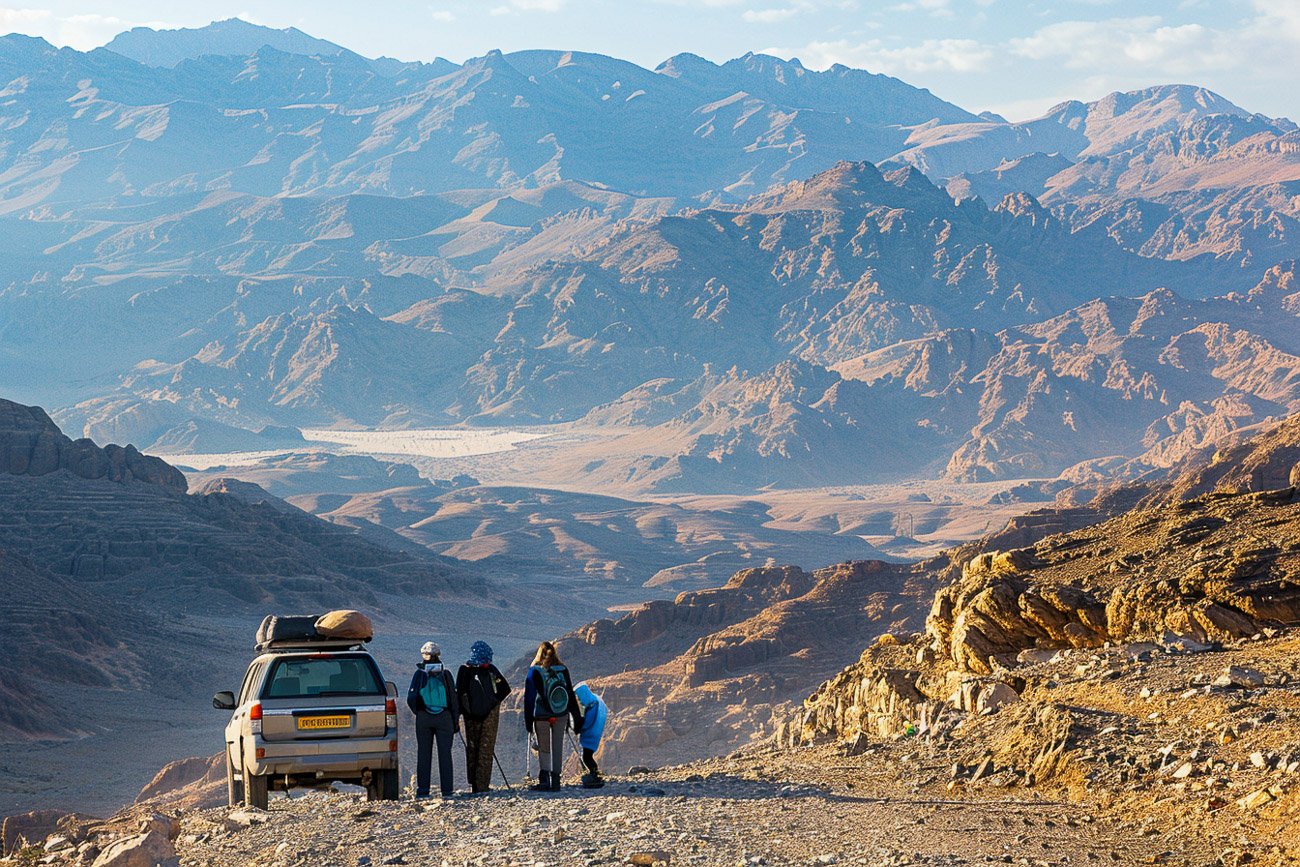
A Comprehensive Guide to Cross-Border Family Travels: Top Itineraries from Dubai to Oman
Driving from the United Arab Emirates into the Sultanate of Oman represents one of the most accessible and geographically diverse cross-border road journeys in the Middle East. For families residing in or visiting Dubai, this journey transitions rapidly from hyper-modern urban landscapes to rugged mountain passes, coastal highways, and deep desert dunes. Understanding the practical logistics, border protocols, and geographic variations is essential for planning a successful multi-day family excursion that accommodates varying ages and interests.
This educational guide details the structural requirements, border processes, and route planning necessary to execute a seamless international road trip. Readers will learn about the primary border crossings, vehicle documentation criteria, and specialized routes tailored to specific timeframes and regions. By exploring various top family road trip itineraries from dubai to oman, families can align their travel goals with practical terrain requirements, cost expectations, and safety frameworks.
Overview of Top Family Road Trip Itineraries from Dubai to Oman
Understanding top family road trip itineraries from dubai to oman requires a foundational knowledge of the geographic relationship between the two nations. Oman is divided into distinct regions, including the main territory bordering the UAE to the east and south, and unique exclaves like the Musandam Peninsula, which sits separated from the mainland by UAE territory. Consequently, a road trip from Dubai is not a singular pathway but a collection of distinct routes determined by the chosen destination, border post, and vehicle capability.
Families commonly approach these itineraries to achieve a mix of cultural immersion, historical exploration, and outdoor adventure. The typical expectation of a cross-border drive involves navigating well-maintained, multi-lane highways within the major corridors, transitioning to winding mountain switchbacks or graded gravel tracks near natural wadis (valleys). The ultimate outcome of a structured itinerary is a predictable, safe journey where border delays are minimized, fuel and rest stops are strategically timed, and the terrain matches the mechanical limitations of the family vehicle.
Key Route Categories and Approaches
Selecting the appropriate route depends on available vacation time, driver experience, and the ages of the children traveling. The major geographic trajectories can be divided into four primary approaches.
Comparison of Cross-Border Route Types
| Category / Type | Description | Common Use Case | Time / Cost / Effort Level |
| The Musandam Exclave Route | A coastal drive entering northern Oman via Ras Al Khaimah, bounded by dramatic fjords and cliffs. | Weekend getaways, marine mammal viewing, and light dhow cruise activities. | Low Time (2–3 days) / Low Cost / Moderate Effort |
| The Capital Corridor (Muscat) | The classic highway itinerary via the Hatta or Kalba borders, connecting directly to the Omani capital. | First-time visitors seeking urban comfort, historic forts, and museums. | Moderate Time (3–5 days) / Moderate Cost / Low Effort |
| The Interior Heritage Route | A trajectory entering through Al Ain, targeting the historic city of Nizwa and the Hajar Mountains. | Families with older children interested in mountain hiking, forts, and desert camping. | Moderate Time (4–6 days) / Moderate Cost / High Effort |
| The Southern Overland Journey | An extensive desert highway drive stretching down to the sub-tropical southern city of Salalah. | Extended school breaks, specifically during the summer monsoon (Khareef) season. | High Time (7–10+ days) / High Cost / High Effort |
To choose between these variations, families must balance the age-appropriate tolerance for driving hours against the desired landscape. Families with toddlers typically favor the shorter Musandam or Muscat highway corridors to limit time spent in car seats, whereas families with adolescents often opt for the Interior Heritage route due to the availability of active mountain trekking and desert dune activities.
Practical Scenarios and Thematic Applications
To contextualize these routes, the following practical applications illustrate how distinct family needs dictate specific travel structures.
Scenario 1: The Short Weekend Coastal Escape (Musandam Peninsula)
This application targets families with limited time who desire a distinct change of scenery without excessive driving hours. The route bypasses the Omani mainland entirely.
-
Execution Steps:
-
Depart Dubai via the E11 highway heading north through Sharjah and Ras Al Khaimah.
-
Approach the Al Darah Border Post for exit and entry processing.
-
Drive along the winding coastal road to the capital town of Khasab.
-
Board a traditional Omani dhow at Khasab Port for dolphin watching and snorkeling in the fjords.
-
-
Key Locations: Khasab, Khor Ash Sham, Jebel Harim.
-
Relevance: It provides an international travel experience with less than three hours of total driving time from Dubai to the border, minimizing long-distance fatigue for younger children.
Scenario 2: The Classic Cultural & Urban Circuit (Muscat & Nizwa)
This balanced itinerary introduces foundational Omani culture, combining modern highway driving with structural historical landmarks.
-
Execution Steps:
-
Depart Dubai early via the E102 toward the Hatta Border Crossing (Al Wajajah on the Oman side).
-
Follow Route 1 along the Batinah coastline or the newer interior highway to Muscat.
-
Allocate two days for urban exploration, visiting architectural landmarks and traditional markets.
-
Drive inland for 1.5 hours via modern dual carriageways to the historical oasis city of Nizwa.
-
Return to Dubai via the Mezyad border post through Al Ain to complete a loop.
-
-
Key Locations: Sultan Qaboos Grand Mosque, Mutrah Souq, Nizwa Fort, Bimmah Sinkhole.
-
Relevance: This loop utilizes major, well-lit highway networks, ensuring high availability of fuel stations, rest stops, and international medical facilities, making it highly suitable for multi-generational families.
Scenario 3: The Mountain Adventure & Wadis Expedition (Jebel Akhdar & Jebel Shams)
Designed for active families, this itinerary focuses on high-altitude climates and rugged natural terrain requiring specialized vehicular performance.
-
Execution Steps:
-
Depart Dubai via the E66 toward Al Ain, crossing at the Khatm Al Shiklah or Mezyad border.
-
Head directly toward Ibri and forward to the base of the Western Hajar Mountains.
-
Ascend the steep, paved roads of Jebel Akhdar (Green Mountain) or the rugged tracks of Jebel Shams.
-
Engage in guided village walks, canyon viewing, and temperature-controlled high-altitude relaxation.
-
Descend to explore shallow mountain wadis before returning via the interior plains.
-
-
Key Locations: Jebel Akhdar checkpoint, Wadi Ghul, Misfat Al Abriyeen mud village.
-
Relevance: The high altitude offers cooler temperatures year-round, serving as a refuge from summer heat, though it strictly demands a four-wheel-drive vehicle and technical mountain driving proficiency.
Scenario Analysis
While Scenario 1 maximizes maritime activities and reduces transit hours, Scenarios 2 and 3 require extended cross-border driving but deliver a deeper look at the diverse topography of the Omani mainland. Scenario 2 is best suited for families preferring boutique urban hotels and smooth pavements, whereas Scenario 3 targets families seeking off-grid adventure, requiring strict adherence to vehicle restrictions due to steep mountain checkpoints.
Planning, Budget, and Resource Considerations
Executing a cross-border road trip involves predictable administrative fees, fuel calculations, and situational operational expenses. Proper budgeting ensures that families do not experience preventable delays at immigration checkpoints or remote sectors.
Note on Estimates: The monetary figures provided below represent typical baselines and are subject to regulatory changes, exchange rate fluctuations, and seasonal hotel pricing adjustments.
Sample Expedition Budget and Resource Plan
| Category | Estimated Amount / Effort | Explanation | Optimization Tips |
| Border Fees & Visas | AED 35 exit fee per person (UAE); OMR 5 (~AED 48) entry visa per person (Oman). | Mandatory government tariffs collected at immigration counters for UAE residents/tourists. | Apply for the Oman eVisa online prior to departure to avoid peak-hour processing lines. |
| Vehicle Insurance | AED 105 – AED 150 (5-day minimum third-party). | The mandatory cross-border insurance document, known regionally as the “Orange Card.” | Check if your current UAE comprehensive insurance has an integrated Oman extension rider. |
| Fuel Allocation | AED 250 – AED 500 total per trip. | Based on average regional fuel pricing and total distances ranging between 300 to 1,200 kilometers. | Top up the fuel tank completely before leaving the UAE border zone, as station gaps increase in Oman. |
| Lodging & Access | AED 300 – AED 900 per night. | Family-sized accommodations ranging from simple heritage guest houses to mountain resorts. | Book mountain accommodations well in advance during winter months and holiday weekends. |
Strategies, Navigation, and Support Options
Navigating rural and mountain routes across international borders requires robust planning mechanisms. Drivers can utilize various systems to manage transit logistics.
1. Pre-Approved Electronic Visas (eVisas)
The digital portal provided by the Royal Oman Police allows travelers to submit credentials and clear visa requirements prior to reaching the physical border posts.
-
Advantages: Reduces processing time at the physical immigration counter from hours to minutes; provides advance clarity on entry eligibility.
-
Disadvantages: Requires rigid upfront planning; non-refundable if travel dates shift unexpectedly.
2. Offline Digital Cartography
Downloading regional mapping data via mobile navigation applications ensures continuity of directional tracking when cellular roaming networks drop.
-
Advantages: Operates completely independent of active cellular towers via standard internal device GPS.
-
Disadvantages: Does not display real-time traffic anomalies, accidents, or sudden border lane closures.
3. Comprehensive Cross-Border Roadside Assistance
Securing an extended auto club membership or regional roadside policy that explicitly covers recovery inside Omani territory.
-
Advantages: Provides peace of mind regarding long-distance towing, flat tires, or mechanical breakdowns in rural provinces.
-
Disadvantages: Incurs an additional annual or trip-based premium; response times can be slow in deep interior valleys.
Safety, Risks, and Common Challenges
Cross-border family travel presents unique operational risks that differ significantly from urban driving within Dubai. Identifying these risks prevents structural travel disruptions.
-
Inadequate Vehicle Documentation for Borrowed/Leased Cars:
-
The Issue: Being turned away immediately at the UAE border control gate.
-
Why it Happens: If a vehicle is financed through a bank or rented, the registration is not under the driver’s sole unencumbered name.
-
Mitigation: Secure a formal, notarized No Objection Certificate (NOC) in Arabic from the rental agency or leasing bank specifying permission to cross into Oman.
-
-
Flash Flooding inside Mountain Wadis:
-
The Issue: Rapidly rising water engulfing vehicles parked or driving within dry riverbeds.
-
Why it Happens: Mountain storms miles away cause sudden, violent water accumulation down dry canyons with zero local warning.
-
Mitigation: Never camp, park, or enter a wadi floor if rain is forecast anywhere in the mountain range; exit the low-lying valley immediately upon cloud buildup.
-
-
Mountain Checkpoint Restrictions (Jebel Akhdar):
-
The Issue: Military checkpoints denying access up the mountain road.
-
Why it Happens: The Royal Oman Police strictly prohibits standard two-wheel-drive sedans from ascending due to the extreme braking required on the descent.
-
Mitigation: Ensure your chosen itinerary uses a true four-wheel-drive (4×4) or all-wheel-drive vehicle with an appropriate engine displacement, and confirm your vehicle registration documentation matches.
-
Maintenance and Long-Term Trip Best Practices
To preserve family safety across long stretches of desert highways, a regular maintenance review protocol must be observed before turning the ignition key.
Pre-Departure Fleet Checklist
-
[ ] Tire Inspection: Verify tread depth and adjust air pressure to account for high-speed highway heat and full family luggage weight loads. Ensure the spare tire is fully inflated and the jack is operational.
-
[ ] Fluid Level Certification: Verify engine oil quality, brake fluid integrity, and top off windshield washer fluids.
-
[ ] Braking System Evaluation: Mountain routes place severe thermal stress on brake pads; ensure pads have substantial life remaining before attempting descents.
-
[ ] Climate Control Check: Confirm the vehicle’s air conditioning system functions perfectly, as interior cabin temperatures impact passenger hydration and fatigue levels.
Regular route reviews are also vital. Road networks update, border protocols switch to digital frameworks, and seasonal weather patterns close off specific wadis. Checking current road conditions within 48 hours of departure protects the family from unnecessary detours.
Documentation and Itinerary Mapping
Documenting and organizing your family travel details ensures that vital international border permits and safety metrics are easily accessible to the driver. Keeping digital copies of passports, visas, vehicle ownership cards (Mulkiya), and cross-border insurance certificates in a dedicated offline folder prevents structural delays during inspections.
Illustrative Examples of Structured Itinerary Tracking
[Example 1: Muscat Express Route]
Checkpoint: Hatta - Al Wajajah Border Post
Primary Route: UAE E44 to Oman Route 1 (Coastal Highway)
Family Logistics Stop: Sohar Flyover Services (Fuel, Restrooms, Food)
Emergency Contact: Royal Oman Police (9999)
[Example 2: Interior Heritage Circuit]
Checkpoint: Mezyad Border Post (Al Ain)
Primary Route: Oman Route 21 through Ibri to Nizwa
Family Logistics Stop: Bahla Regional Petrol Station Hub
Special Requirement: Switch vehicle to low gear descent mode at Jebel Akhdar Checkpoint
Closing Summary
Planning top family road trip itineraries from dubai to oman requires aligning family dynamics with proper geographic routes, administrative cross-border permits, and mechanical preparations. Whether a family selects a concise weekend tour along the Musandam Peninsula fjords or undertakes a cultural highway loop linking Muscat and Nizwa, the success of the expedition depends entirely on methodical foresight. Ensuring proper vehicle insurance, verifying passport and visa validities, and respecting the varied topographies ensures a safe, educational, and highly rewarding international road travel experience.
Meta Information
-
Meta Title: Top Family Road Trip Itineraries from Dubai to Oman: Essential Guide
-
Meta Description: Discover comprehensive family road trip routes from Dubai to Oman. Learn about border rules, vehicle requirements, itineraries, and safety tips for a seamless cross-border drive.
Frequently Asked Questions
1. Can a rented vehicle be driven across the border from Dubai into Oman?
Yes, but it is entirely dependent on the rental provider’s policies. The driver must secure a formal No Objection Certificate (NOC) written in Arabic from the rental company, along with a cross-border insurance certificate (Orange Card) issued specifically for that vehicle chassis number. Not all rental agencies permit cross-border travel, so verification is required before booking.
2. Is a four-wheel-drive (4×4) vehicle mandatory for all Omani road trip itineraries?
A four-wheel-drive vehicle is not required if the family sticks strictly to the main coastal highways connecting Dubai to Muscat, or the city limits of Khasab and Nizwa. However, a 4×4 is legally mandatory at police checkpoints to ascend Jebel Akhdar, and it is highly recommended for safety when exploring unpaved mountain tracks, steep valley drops, or desert wilderness areas.
3. What are the passport validity requirements for entering Oman by road?
All travelers, including adults, children, and infants, must possess a passport that is valid for a minimum of six months from the exact date of entry into the Sultanate of Oman. UAE residents must also ensure that their residency visas carry at least six months of remaining validity to guarantee smooth re-entry back into the United Arab Emirates.