The Comprehensive Guide to Sustainable Family Glamping
Outdoor hospitality has experienced a significant structural evolution, driven by a growing global demand for nature-based travel that does not sacrifice foundational comfort. Families increasingly seek alternatives to traditional high-density resorts, turning instead to low-impact, ecologically sound accommodations. This shift has popularized “glamping”—or glamorous camping—allowing multi-generational groups to experience wilderness environments without the logistical burdens of traditional tent camping.
When traveling with children, selecting a site requires a careful balance between rigorous environmental sustainability and structural safety. This guide provides a neutral, textbook-quality framework for identifying, planning, and managing outdoor vacations at dedicated, low-impact properties. By establishing clear criteria for eco-certifications, physical infrastructure, and geographic suitability, families can ensure an educational, safe, and environmentally responsible travel experience.
Overview of Eco-Friendly Family Glamping
Understanding how to evaluate the best eco friendly glamping spots for families with kids requires examining the intersection of green engineering and family-centered hospitality. True eco-friendly glamping properties prioritize a minimal ecological footprint. They achieve this through off-grid power generation (such as solar arrays), low-flow graywater filtration, strict zero-waste mandates, and non-permanent architectural footprints that preserve the surrounding flora and fauna.
Families commonly approach these properties with the dual goals of achieving a “digital detox” and introducing children to conservation practices. The expected outcome of a well-researched stay is an immersive experience where the natural environment serves as the primary recreational amenity. However, traveling with children introduces specific operational prerequisites, such as reliable water heating, secure perimeter boundaries, and accessible emergency communication links. Evaluating a site involves looking beyond marketing terminology to verify that its environmental claims are backed by physical infrastructure that accommodates children safely.
Primary Categories of Eco-Friendly Glamping Structures
Sustainable glamping sites deploy various architectural styles to minimize soil disruption and energy consumption. The layout, insulation, and space configuration of these units dictate their suitability for different age groups.
Comparative Framework of Sustainable Glamping Structures
| Category / Type | Description | Common Use Case | Time / Cost / Effort Level |
| Canvas Safari Tents | Heavy-duty, breathable cotton canvas pitched on elevated wooden platforms to prevent soil compaction. | Arid or temperate valley settings; ideal for multi-room family layouts. | Low Setup Time / Medium Cost / Moderate Planning Effort |
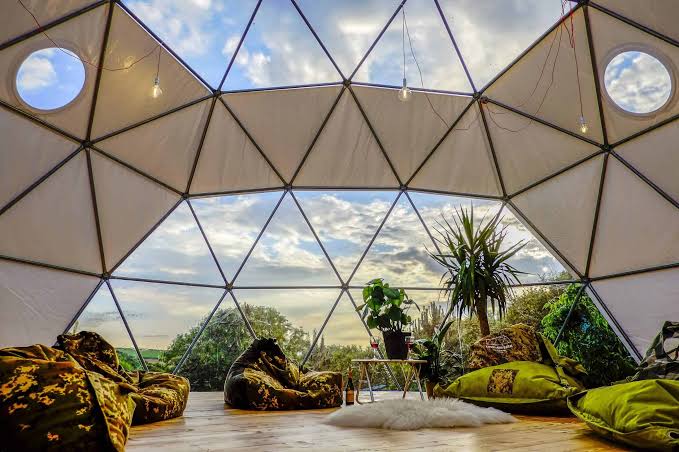
| Geodesic Domes | Spherical architectural frames utilizing minimal materials to provide high structural strength and climate efficiency. | Montane or desert environments with extreme high/low temperature shifts. | Moderate Setup Time / High Cost / Low Planning Effort |
| Biophilic Treehouses | Elevated timber structures built around living trees using non-invasive hardware to protect bark growth. | Forested canopy environments; best suited for families with older children. | High Construction Time / High Cost / High Planning Effort |
| Converted Eco-Pods | Compact, micro-cabins constructed entirely from locally sourced timber or recycled agricultural materials. | High-latitude or rainy climates requiring rigid wall insulation and heating. | Low Setup Time / Low-Medium Cost / Low Planning Effort |
Selecting the Right Structural Type
Choosing among these structures depends on child development stages and regional weather patterns. Canvas safari tents offer separate sleeping compartments, making them highly functional for families requiring distinct spaces for toddlers. Geodesic domes optimize airflow and heating, which suits locations with significant diurnal temperature shifts. Treehouses present elevated clearance risks, making them structurally inappropriate for toddlers but highly engaging for teenagers interested in forest ecology.
Practical Scenarios and Thematic Applications
The process of sourcing the best eco friendly glamping spots for families with kids changes based on the geographic setting and the educational goals of the vacation.
Scenario 1: The National Park Border Stay
A family seeks an off-grid base camp directly adjacent to a protected national park, prioritizing early trail access and zero-waste camp operations.
-
Step-by-Step Execution Process:
-
Identify glamping outposts located within a 30-minute buffer zone of national park gates.
-
Verify that the site operates on solar battery storage and enforces strict wildlife-proof food locker protocols.
-
Select an elevated canvas suite featuring integrated private composting toilets to eliminate reliance on municipal sewage grids.
-
Coordinate daily self-guided junior ranger educational hikes using property trail maps.
-
-
Key Components: Private solar charging ports, low-flow solar showers, shared community fire pits utilizing sustainably harvested wood, localized natural history guides.
-
Representative Locations: Buffer zones outside Grand Canyon National Park, Arizona; margins of Zion National Park, Utah.
Relevance of the Park Border Scenario
This application eliminates the long daily commutes associated with staying in distant urban hotels. It allows families to remain inside the natural rhythm of the park ecosystem, experiencing dark sky environments for stargazing while minimizing vehicular carbon emissions during the trip.
Scenario 2: The Regenerative Agrifarm Immersion
A family seeks an educational stay on a working organic farm or vineyard, where children participate directly in food production and animal husbandry.
-
Step-by-Step Execution Process:
-
Locate working agritourism estates that feature certified organic or permaculture farming models.
-
Confirm the presence of child-specific farm workshops, such as egg collection, native seed planting, or composting education.
-
Ensure the lodging units (often converted timber pods or historic wagons) feature localized graywater recycling systems that feed the farm crops.
-
Opt for full-board dining plans where all meals are sourced entirely from the property’s acreage.
-
-
Key Components: Working permaculture beds, hands-on livestock enclosures, on-site farm-to-table communal kitchens, natural rainwater collection systems.
-
Representative Locations: Agricultural corridors in Tuscany, Italy; organic valley homesteads in the Pacific Northwest, Oregon.
Relevance of the Agrifarm Scenario
This scenario provides a direct, practical lesson in sustainability for children. It contextualizes the origin of food systems, showing how closed-loop agriculture functions while offering a controlled, vehicle-free environment for children to explore safely.
Scenario 3: The Coastal Wilderness Detach
A family requires a coastal escape centered on marine conservation, low-impact water sports, and beach environments that do not disrupt nesting shorebirds.
-
Step-by-Step Execution Process:
-
Target properties situated behind primary sand dunes, utilizing elevated boardwalks to protect coastal vegetation.
-
Filter for operators that bar single-use plastics from the property and supply reef-safe biodegradable sunscreens and insect repellents.
-
Verify that all provided water sports gear (e.g., paddleboards, sea kayaks) is non-motorized to avoid marine noise pollution.
-
Select units featuring solar-powered fans and cross-ventilation architecture instead of energy-intensive commercial air conditioning.
-
-
Key Components: Non-permanent beachfront yurts, boardwalk infrastructure, community-led beach cleanup programs, marine biology educational kits.
-
Representative Locations: Coastal preservation zones in Costa Rica; pristine eco-reserves in Brittany, France.
Relevance of the Coastal Scenario
Coastal ecosystems are highly vulnerable to tourism-induced erosion and plastic waste. Utilizing a dedicated eco-glamping site ensures that a family’s beach vacation does not contribute to dune destruction or marine litter, while providing direct, immediate access to marine education.
Scenario Comparison
The Park Border scenario requires navigating off-grid energy constraints and wildlife protocols, making it excellent for active, hiking-oriented families. The Agrifarm scenario emphasizes structured, localized human activities, providing the highest educational value for younger children. The Coastal scenario balances relaxation with marine conservation, offering flat terrains that are logistically easier for families managing infants or toddlers.
Planning, Budgeting, and Resource Considerations

Eco-friendly glamping properties generally carry higher operational overhead due to the specialized nature of green waste management, solar infrastructure maintenance, and low-density land use. Consequently, budgeting requires anticipating cost structures that differ from standard hotel operations.
Sample Family Glamping Budget & Allocation Framework
Note: The figures, allocations, and operational timelines provided below represent illustrative examples for a standard four-person family stay over five nights. Actual costs vary based on geographic location, seasonality, and off-grid complexity.
| Category | Estimated Cost / Effort | Explanation | Optimization Tips |
| Base Sustainable Lodging | $250 – $600 / night | Rates for structural units built from certified sustainable materials with private eco-bathrooms. | Book during the shoulder season (e.g., late spring or early autumn) when environmental demand drops. |
| Off-Grid Utility Fees | $0 – $40 / stay | Optional or mandatory contributions for solar battery maintenance or carbon offsetting. | Check if the property offers fee credits for families who participate in on-site conservation projects. |
| Eco-Educational Programming | $30 – $100 / activity | Guided wildlife tracking, survival bushcraft classes, or organic farming workshops for kids. | Look for properties that bundle daily children’s workshops into the base room rate. |
| Sustainable Provisions | $80 – $200 / day | Locally sourced, organic meals prepared on-site or organic grocery baskets for self-catering. | Utilize the en-suite or communal outdoor kitchens to prepare breakfast and lunch from local markets. |
| Damage & Conservation Deposit | $150 – $300 (Refundable) | A hold placed to cover property integrity and adherence to zero-waste/LNT guidelines. | Brief children on Leave No Trace principles prior to arrival to prevent accidental landscape damage. |
Research Strategies and Verification Methods
To systematically identify the best eco friendly glamping spots for families with kids, travelers must use objective verification methods rather than relying entirely on promotional copy.
1. Global Sustainable Tourism Council (GSTC) Registries
-
What it is: Checking properties against third-party audited green certifications recognized globally (e.g., Green Key, EarthCheck).
-
Advantages: Eliminates corporate greenwashing; guarantees measurable benchmarks in waste reduction and energy efficiency.
-
Disadvantages: Many small-scale, highly authentic family glamping sites cannot afford the administrative cost of formal certification despite being eco-friendly.
2. Specialized Outdoor Hospitality Directories
-
What it is: Utilizing curated booking networks that filter properties strictly by architectural type, outdoor access, and sustainable values.
-
Advantages: Offers detailed breakdowns of structural amenities, child safety parameters, and exact property terrains.
-
Disadvantages: Booking commissions can be higher than booking directly with the property owner.
3. Open-Source Community Travel Forums
-
What it is: Reviewing unfiltered traveler logs, family travel message boards, and crowd-sourced photo repositories.
-
Advantages: Provides authentic insight into child safety hazards (e.g., broken boardwalks, aggressive insects) that official sites omit.
-
Disadvantages: Subjective reviews require manual sorting to distinguish between structural issues and individual customer service complaints.
4. Direct Communication via Pre-Arrival Questionnaires
-
What it is: Sending a direct, structured email inquiry to the camp director detailing specific family operational needs.
-
Advantages: Secures written confirmation of safety features (e.g., mosquito netting integrity, potable water sources, cellular signal backups).
-
Disadvantages: Requires manual effort and time, occasionally delayed by timezone or off-grid communication lags.
Safety, Risks, and Common Challenges
Transitioning from a traditional hotel room to an outdoor glamping structure introduces dynamic environmental variables that require active mitigation.
Wildlife Encroachment and Food Storage Failures
-
The Issue: Unsecured food items, candy wrappers, or scented baby wipes left inside canvas tents attract rodents, insects, or larger predatory mammals into the sleeping area.
-
Mitigation Advice: Enforce a strict “no food or scent” policy inside the sleeping structures. Utilize the camp’s centralized bear-proof lockers or hard-sided vehicles to store all foodstuffs, snacks, formula, and scented toiletries.
Weather Extremes and Insulation Mismatches
-
The Issue: Canvas tents and uninsulated wooden pods track ambient temperatures closely. A sudden drop in night temperatures can result in hypothermia risks for infants or young children.
-
Mitigation Advice: Verify the heating infrastructure before booking. Choose units equipped with low-emission wood stoves or solar-powered thermal blankets, and pack multi-layered synthetic or wool sleepwear explicitly for children.
Off-Grid Power Delusions
-
The Issue: Families arriving with multiple electronic devices, medical equipment (such as CPAP machines), or bottle warmers can inadvertently deplete a unit’s dedicated solar battery storage bank, causing a blackout.
-
Mitigation Advice: Educate children on energy conservation beforehand. Limit device usage, charge essential items only during peak daylight hours when the solar panels are actively generating power, and confirm if the property has a central backup generator.
Graywater and Blackwater System Etiquette
-
The Issue: Children accidentally flushing traditional wet wipes, diapers, or conventional chemical soaps down sensitive composting or low-flow toilets can break the camp’s biological filtration ecosystem.
-
Mitigation Advice: Use only the biodegradable, property-provided soaps and shampoos. Conduct a brief orientation session with children on arrival to demonstrate the proper operation of composting or foot-pump toilets.
Best Practices for Site Assessment and Long-Term Preparation
Ensuring the longevity of sustainable travel habits requires a systemic approach before, during, and after an outdoor stay.
Operational Pre-Arrival Checklist
-
3 Months Before Departure: Verify the immunization requirements for the destination region, focusing on insect-borne or water-borne vectors. Check the structural integrity of all personal outdoor gear (e.g., child carriers, hiking boots).
-
1 Month Before Departure: Confirm the camp’s potable water source status. If the property relies on rainwater collection, verify that purification systems (e.g., UV or reverse osmosis) are fully operational for safe drinking water.
-
1 Week Before Departure: Review local weather trends. Contact the site manager to ensure no seasonal shifts (such as high wind alerts or sudden droughts) have altered the safety of the local terrain or paths.
The Value of Regular Review
Environmental conditions at off-grid sites are highly dynamic. A site that maintained pristine trail systems or optimal solar arrays during one season may experience trail erosion, fire damage, or equipment degradation by the next. Consistently checking recent guest input and environmental alerts ensures that a site remains safe and viable for young children.
Documentation, Mapping, and Packing Organization
Because eco-glamping spots are often isolated from standard commercial centers, keeping clear records of your itinerary, safety data, and gear organization is essential for smooth logistics.
Tips for Managing Remote Site Information
-
Maintain Analog Backups: Print out hard copies of topographical maps, reservation confirmations, and emergency vehicle routing, as cell service can be intermittent near protected conservation zones.
-
Consolidate Emergency Protocols: Document the contact details, coordinates, and driving paths to the nearest 24-hour emergency medical facility relative to the glamping site.
-
Implement Color-Coded Packing: Organize family gear into weatherproof, color-coded dry bags to prevent moisture infiltration and ensure quick access inside compact glamping layouts.
Illustrative Data Logging Examples
Example 1: The High-Desert Dome Log
-
Property Parameters: Site 4, Desert Eco-Dome. Off-grid solar system cap: 1.5 kWh daily. Composting toilet requires dry sawdust cover after each use. Emergency Node: Regional Hospital located 42 miles north via Route 9. Cell Signal: 1 bar at the main lodge ridge only.
Example 2: The Forest Canopy Treehouse Log
-
Property Parameters: Treehouse Suite B. Suspension bridge access (structural limit: 500 lbs max capacity). Safety netting checked and secure. Potable water available via centralized well filtration tap at the base clearing. No open flames permitted on wood decks.
Closing Summary
Locating the best eco friendly glamping spots for families with kids provides an excellent opportunity to combine modern comfort with deep environmental stewardship. By moving past standard travel formats and focusing on vetted architectural designs, third-party eco-certifications, and clear child safety measures, families can enjoy pristine wilderness settings responsibly. While these off-grid stays require more intentional planning, rigorous energy management, and active safety oversight, the outcome is a highly educational, safe, and deeply memorable vacation that fosters a long-term appreciation for ecological conservation in the next generation.
Frequently Asked Questions (FAQ)
What makes a glamping spot genuinely “eco-friendly”?
A genuinely eco-friendly glamping property must demonstrate measurable strategies to limit its impact on the land. This includes utilizing non-permanent architectural structures (like canvas tents or domes built on raised pilings), operating on renewable energy sources (such as solar or wind power), employing closed-loop composting or graywater filtration systems, and enforcing strict zero-waste and Leave No Trace operational policies.
Do eco-friendly glamping sites have private bathrooms for families?
Bathroom configurations vary significantly by property tier. Many modern luxury eco-glamping sites feature private, en-suite bathrooms integrated directly into the tent or dome structure, utilizing low-flow plumbing or modern composting toilets. Other properties utilize private, dedicated bathhouses located a short walk from the sleeping unit. It is essential to confirm these configurations prior to booking if you have young children.
How do off-grid glamping sites handle medical emergencies for children?
Reputable glamping properties maintain continuous, dedicated emergency communication channels, such as satellite radios or cellular boosters at the central manager’s lodge. On-site staff are typically trained in wilderness first aid, and properties keep comprehensive medical kits on hand. Prior to booking, families should verify the exact driving distance to the nearest regional hospital facility.
Can we charge medical devices or electronic items at an off-grid site?
Most premium eco-glamping units provide small, dedicated solar-powered USB charging ports suitable for mobile devices or cameras. However, high-wattage appliances (like hair dryers or bottle warmers) are typically prohibited because they overload the system. If you require continuous power for medical devices like CPAP machines, you must clear this with the property management beforehand to ensure they can allocate an appropriate battery array or backup generator.
Are eco-friendly glamping sites appropriate for toddlers and infants?
Yes, provided the site is selected with mobility and safety in mind. Canvas safari tents pitched on flat ground or low platforms are generally the safest choices for toddlers. Parents should avoid elevated treehouses or cliffside yurts that feature steep ladders, open railings, or uneven suspension bridges until children are older and more physically coordinated.