The Framework for Premium Independent Hospitality: Navigating Boutique Lodging in Central London
Urban family travel requires a careful balance between central geography, cultural proximity, and physical room comfort. When choosing accommodations in a major capital city, families often find themselves deciding between large, predictable corporate high-rises and smaller, independent properties. In historic urban centers like London, this choice is shaped by local building codes and historic architecture. Large commercial chains are often pushed outside the historic core, leaving the most central neighborhoods populated by smaller, converted independent properties.
Finding suitable premium lodging requires a clear understanding of room layouts, local transportation links, and structural configurations. This guide outlines the structural, financial, and operational frameworks for evaluating top rated family boutique hotels in london city center. Readers will learn to analyze neighborhood configurations, manage multi-room reservations in historic buildings, budget for hidden municipal taxes, and verify amenities to ensure a comfortable family vacation.
Overview of Central London Family Boutique Lodging
Sourcing the top rated family boutique hotels in london city center requires understanding how independent properties adapt historic architecture for modern families. In the UK hospitality sector, a boutique hotel is generally defined as an upscale, independently operated property containing fewer than 100 rooms, built around a unique design concept, historical theme, or neighborhood identity. Unlike standardized global chains, these properties are frequently housed in protected historic buildings, such as Georgian townhouses, Victorian blocks, or Edwardian warehouses.
Families often choose these properties to stay directly inside central cultural districts, avoiding long daily tube commutes from the outer suburbs. The goal is to secure a quiet, neighborhood-scale base camp that combines distinctive local charm with essential family features, such as connecting doors, en-suite kitchenettes, or baby equipment. However, historic structures come with specific physical layouts, including narrow corridors, varying floor heights, and strict occupancy limits. Evaluating these properties requires looking beyond styled marketing photos to analyze the actual room dimensions and safety details of the hotel.
Primary Property Typologies and Structural Configurations
Independent hotels in central London reflect the architecture of their respective neighborhoods. These variations dictate how well a property can accommodate specific family configurations.
Property Typology Matrix
| Category / Type | Description | Common Use Case | Time / Cost / Effort Level |
| Georgian Townhouse Conversions | Interconnected residential townhouses featuring narrow staircases, original fireplaces, and quiet courtyard views. | Intimate family stays in quiet residential enclaves near central green spaces. | High Search Time / Medium-High Cost / Moderate Effort |
| Edwardian or Victorian Blocks | Larger historic commercial facades featuring high ceilings, wide public corridors, and integrated basement facilities. | Central theater-district stays requiring robust elevator infrastructure and larger shared lounges. | Low Search Time / High Cost / Low Effort |
| Repurposed Industrial Warehouses | Converted commercial spaces featuring exposed brickwork, iron beams, hard flooring, and open-plan loft layouts. | Extended stays with teenagers who prefer vibrant urban neighborhoods and open, loft-style spaces. | Moderate Search Time / Medium Cost / Low Daily Effort |
| Boutique Soft-Brand Residences | Privately owned apartments or townhouses that utilize a central brand’s check-in desk and housekeeping networks. | Multi-generational travel groups requiring full en-suite kitchens alongside hotel-tier concierge support. | Moderate Search Time / High Cost / High Planning Effort |
Selecting the Proper Structural Layout
Choosing among these typologies depends heavily on your family’s mobility and noise tolerance. Georgian townhouse conversions offer excellent privacy and a quiet atmosphere, but their historic staircases and split-level floor plans can make them challenging for families navigating heavy strollers or packing large luggage pieces. Edwardian blocks and converted industrial warehouses generally feature more predictable elevator access and wider entryways, making them structurally easier to navigate with young children or bulky gear.
Practical Scenarios and Spatial Applications
Reviewing specific neighborhood applications demonstrates how to identify top rated family boutique hotels in london city center based on your trip’s focus and your family’s demographics.
Scenario 1: The Museum-Focused Academic Visit
A family with school-aged children targets an extended educational visit focused on the major cultural institutions along Exhibition Road, requiring immediate pedestrian access to avoid peak-hour public transit.
-
Step-by-Step Selection Process:
-
Map independent properties located within a 15-minute walking radius of the Natural History and Science Museums.
-
Filter for properties housed in historic stucco-fronted buildings that offer dedicated “Family Triple” or “Quad” room configurations.
-
Verify that the property features on-site dining options with dedicated children’s menus to simplify evening dining after long days on your feet.
-
Confirm with the concierge that the property sits on a low-traffic side street to ensure a quiet environment for early bedtimes.
-
-
Key Components: Walkability to major attractions, dedicated multi-bed family rooms, on-site dining, quiet side-street locations.
-
Representative Neighborhoods: South Kensington, Chelsea, or early margins of Knightsbridge.
Relevance of the Museum Scenario
Staying within walking distance of major educational sites eliminates the stress of navigating crowded underground platforms with tired children. These residential neighborhoods also offer easy access to local garden squares, providing a quiet space to decompress between museum visits.
Scenario 2: The West End Theater and Park Blend
A family traveling with a teenager and a young toddler seeks a central base close to West End theaters, shopping districts, and central Royal Parks for outdoor recreation.
-
Step-by-Step Selection Process:
-
Search for design-forward boutique hotels located in the West End that feature high-quality exterior soundproofing to block city noise.
-
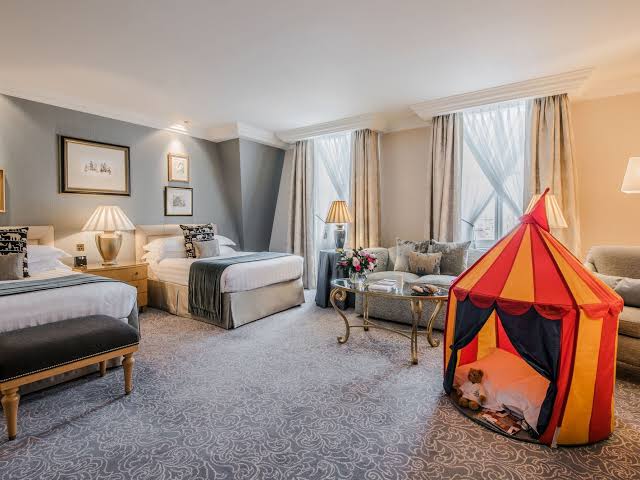
Select properties that offer guaranteed connecting rooms, combining a king-size bed layout with a separate twin or sofa-bed configuration.
-
Confirm the availability of complimentary child amenities, such as child-sized bathrobes, activity packs, or loaner strollers.
-
Verify that pedestrian paths to nearby green spaces (like Hyde Park or St. James’s Park) avoid high-traffic road junctions.
-
-
Key Components: High-tier soundproofing, guaranteed connecting doors, complimentary toddler amenities, accessible pedestrian routes.
-
Representative Neighborhoods: Mayfair, Covent Garden, Soho, or St. James’s.
Relevance of the Theater District Scenario
The West End is a high-density entertainment hub that remains active late into the night. Sourcing a top-rated independent boutique property within this zone ensures that parents can access theater and cultural events while high-performance acoustic window glass and quiet interior courtyards preserve regular sleep schedules for children.
Scenario 3: The Financial District Historic Exploration
A family with older children explores the Roman origins and medieval history of the oldest parts of London, looking for modern room configurations in a quieter weekend neighborhood.
-
Step-by-Step Selection Process:
-
Identify design hotels or converted boutique warehouses located within the historic square mile or adjacent river districts.
-
Filter for loft-style suites or multi-room residences featuring hard flooring and integrated modern tech hubs for older children.
-
Confirm the property features an open rooftop terrace or resident-only lounge for quiet evening relaxation away from crowds.
-
Verify that nearby transit links include river bus piers, offering a scenic and spacious transport alternative to underground trains.
-
-
Key Components: Open loft suites, hard flooring, resident lounges, proximity to river transport links.
-
Representative Neighborhoods: The City of London, Clerkenwell, or Blackfriars perimeters.
Relevance of the Historic City Scenario
The City of London functions primarily as a commercial and financial hub, meaning neighborhood foot traffic and room rates drop significantly on weekends. Families can leverage this cycle to secure high-end independent properties at a lower cost, enjoying quiet streets on Saturdays and Sundays while remaining close to the Tower of London and river transport options.
Scenario Comparison
The Museum scenario focuses on quiet residential neighborhoods and pedestrian access to educational sites. The Theater District scenario prioritizes high-performance soundproofing and connecting rooms directly inside a high-density entertainment zone. The Historic City scenario capitalizes on weekend business-district lulls to secure modern layouts near historic sites. Families with toddlers often prefer the quiet streets of the Museum scenario, while those with teenagers benefit from the independent spaces and tech options of the Historic City or West End.
Planning, Budgeting, and Ancillary Costs

Premium accommodations in historic capital centers involve unique financial factors. Because independent properties manage limited inventories of specialized family configurations, room pricing responds sharply to seasonal events, school holidays, and local demand.
Sample Family Boutique Hotel Budget Framework
Note: The costs, taxes, and fees outlined below represent illustrative examples for a standard four-person family stay over five nights in central London. Actual expenses will fluctuate based on seasonal demand, neighborhood dynamics, and currency exchange rates.
| Category | Estimated Allocation | Explanation | Optimization Tips |
| Family Room / Connecting Suites | £350 – £750 / night | The base cost for guaranteed connecting rooms or an independent multi-bed suite. | Book 4 to 6 months in advance of major holiday windows to lock in opening-tier rates. |
| UK Value Added Tax (VAT) | 20% (Included or added) | Standard national tax applied to visitor accommodations and hospitality services. | Verify whether the quoted rate includes VAT on the final summary page before payment. |
| En-Suite Dining & Provisions | £80 – £150 / day | Daily breakfast, room service add-ons, or stocking an en-suite pantry. | Choose room packages that include breakfast; boutique hotels often emphasize high-quality regional sourcing. |
| Incidental Security Hold | £200 – £500 (Refundable) | A temporary credit card authorization hold placed at check-in to cover potential property damage. | Use a dedicated premium travel credit card to avoid freezing active checking funds. |
Research Strategies and Structural Verification Tools
Identifying properties that balance historical design with family functionality requires using objective verification methods rather than relying entirely on marketing descriptions.
1. Architectural Floor Plan Analysis
-
What it is: Reviewing detailed room dimensions, window styles, and wall placements through the hotel’s direct design portfolio or verified guest photos.
-
Advantages: Confirms if a room features a true separate living area or if a “Family Room” simply adds a rollaway bed that blocks the main walking paths.
-
Disadvantages: Detailed room dimensions are not always displayed on third-party comparison sites.
2. Transport Link Proximity Mapping
-
What it is: Checking the physical distance, pavement quality, and elevator access status of the nearest London Underground station.
-
Advantages: Ensures you choose stations featuring step-free access from the platform to the street, which is essential when handling strollers or heavy luggage.
-
Disadvantages: Standard digital maps do not always highlight temporary elevator maintenance closures or station construction.
3. Direct Guest Relations Questionnaires
-
What it is: Sending a direct, structured email inquiry to the property’s guest relations manager before finalizing your reservation.
-
Advantages: Secures written confirmation of family amenities, including elevator dimensions, window safety restrictors, and crib availability.
-
Disadvantages: Requires extra planning time and depends on the responsiveness of the on-site staff.
4. Search Filter Keyword Auditing
-
What it is: Filtering customer review databases using targeted terms like “family,” “connecting door,” “elevator,” or “street noise.”
-
Advantages: Reveals real-world operational challenges, such as thin walls, narrow elevator cabins, or hidden steps between split-level rooms.
-
Disadvantages: Requires sorting through subjective individual opinions to find accurate notes about the building’s physical layout.
Safety, Operational Risks, and Mitigation Frameworks
Historic buildings updated for modern independent hotels introduce unique physical layout challenges that require active management to protect children.
Narrow Historic Elevators and Staircases
-
The Issue: Many converted townhouse properties incorporate original, compact elevator cabins that can only hold two adults at a time, making it difficult to transport full-size strollers or large luggage sets without multiple trips.
-
Prevention Advice: Confirm the elevator status before booking. If your family relies on a double stroller, request a ground-floor or lower-level room, or verify that the property features a dedicated baggage lift or full porter support.
Split-Level Floors and Interior Steps
-
The Issue: Due to the joining of multiple historic properties, some boutique hotels feature unexpected steps or split-level transitions inside the room itself, presenting a tripping hazard for toddlers or young children.
-
Prevention Advice: Request an updated, single-level flat room layout. Advise the guest relations team in writing that you require a step-free room floor plan to ensure safety for young children.
Variable Heating and Vintage Radiators
-
The Issue: Some historic boutique accommodations utilize exposed vintage cast-iron radiators or older retrofitted air conditioning units that can become hot to the touch or offer inconsistent temperature control.
-
Prevention Advice: Inspect the heating elements immediately upon arrival. Request protective radiator covers from housekeeping if needed, and ask the front desk staff to demonstrate the room’s thermostat controls before unpacking.
Window Openings and Historic Restrictors
-
The Issue: Historic sash windows in older buildings can be heavy and may lack modern, automatic safety locks, presenting a safety hazard if children can reach the sills.
-
Prevention Advice: Check all window frames immediately upon entering the room. Verify that safety restrictors are securely installed and functional, limiting window openings to a maximum of 10 centimeters (4 inches).
Best Practices for Room Assessment and Management
Implementing a structured check-in routine helps minimize logistical hurdles and ensures a safe environment for your entire stay.
On-Site Arrival Assessment Protocol
-
Immediate Entry Checklist: Walk through the room before unpacking your luggage. Test the window safety locks, check the stability of any heavy furniture pieces (like wardrobes or TV stands), and verify that electrical outlets are positioned away from the crib or bed setups.
-
Acoustic and Light Management: Check the curtains to ensure they provide adequate blackout coverage for early bedtimes, and test the room’s soundproofing against street noise.
-
Amenity Verification: Ensure that pre-requested items, such as baby gates, cribs, or bottle warmers, are correctly installed and working properly before evening routines begin.
The Importance of Regular Reviews
Operational standards at independent hotels can shift due to staff changes, building age, or seasonal maintenance cycles. Reviewing recent guest feedback within a 90-day window before your trip ensures that features like elevators, hot water systems, and local transport access are operating reliably for your family’s arrival.
Documentation and Guest Profile Integration
For families who travel regularly, keeping an organized record of specific room preferences and property configurations simplifies the planning process for future urban trips.
Organizing Urban Travel Profiles
-
Log Successful Layouts: Record the specific building types or room numbers that provided the best noise isolation and stroller access.
-
Document Public Transit Data: Track which underground stations feature reliable step-free elevator access, minimizing the need to carry strollers up historic station stairs.
-
Store Property Contacts: Save direct email addresses for on-site managers who provided helpful service, allowing you to bypass central booking pools for future visits.
Family Travel Data Log Examples
Example 1: Residential Townhouse Log
-
Property Record: The Kensington Hideaway. Room 204 (Second Floor Premium Family Suite). Structure: Converted Victorian townhouse layout. Elevator: Compact (requires folding the stroller before entry). Flooring: Low-pile carpet. Noise Level: Extremely quiet; faces a rear residential garden square.
Example 2: Theater District Historic Log
-
Property Record: The Edwardian Plaza, Covent Garden. Connecting Rooms 412/414. Structure: Purpose-built Edwardian block facade. Elevator: Large, modern passenger cabin. Safety Setup: High sash windows fitted with verified heavy-duty safety restrictors. Noise Level: High street-side activity, but blocked effectively by triple-glazed acoustic windows.
Closing Summary
Finding top rated family boutique hotels in london city center allows families to enjoy unique local design and central geographic access without sacrificing comfort. By moving past generic search methods and carefully analyzing neighborhood typologies, checking station elevator access, and verifying window safety restrictors, parents can find functional independent properties. While navigating historic buildings requires extra preparation, careful safety checks, and proactive communication with hotel operators, the result is a safe, comfortable, and memorable London vacation tailored perfectly to the needs of the entire family.
Frequently Asked Questions (FAQ)
What defines a hotel as a family boutique property in central London?
A central London family boutique hotel is an independent property containing fewer than 100 rooms that combines unique local design or historic architecture with functional amenities for children, such as connecting doors, spacious family suites, baby equipment rentals, and central pedestrian access to cultural sites.
Are older historic townhouse hotels safe for active toddlers?
Yes, but they require careful room selection and preparation. Townhouse hotels can feature narrow stairs, split-level floors, or older heating elements. When traveling with young children, parents should request single-level, flat room layouts on lower floors, verify that window safety restrictors are securely installed, and check for exposed radiators upon check-in.
How can I verify if a nearby London Underground station has elevator access?
Standard digital maps do not always show real-world accessibility details. To confirm step-free access, consult the official Transport for London (TfL) accessibility guides or look for the wheelchair icon on official tube maps, which indicates that a station provides step-free access from the platform to the street level.
Why do some central London boutique hotels have strict room occupancy limits?
Many independent hotels operate within historic buildings governed by strict national fire safety regulations and local heritage preservation codes. These laws legally cap the number of occupants allowed in a specific room footprint, regardless of the guest’s age. To stay compliant, always input the exact numbers and ages of all family members during your search.
Do independent boutique hotels provide baby equipment like cribs and highchairs?
Many top-rated boutique hotels provide high-quality cribs, pack-and-plays, and highchairs, but inventories are typically limited due to the property’s small scale. It is essential to request these items in writing immediately after making your reservation, and follow up a week before your arrival to ensure they are confirmed for your room.